
Death and bereavement are deeply personal experiences, yet they also reflect broader societal trends. In Aotearoa New Zealand, the funeral landscape is shaped by an ageing population, very high cremation rates, growing cultural and religious diversity, and a still-young assisted dying regime under the End of Life Choice Act.
The following statistics offer a comprehensive overview of funeral and death trends in New Zealand in 2026.
Across many years of supporting New Zealand whānau through loss, I have seen funerals evolve in ways these numbers capture well. Statistics give you the lay of the land. They show you how most families are farewelling their people right now. That context matters when you plan. But the eulogy itself. The karakia, the waiata, the small story only you can tell. Those are what stay with the room. Know the figures, then trust your own voice.
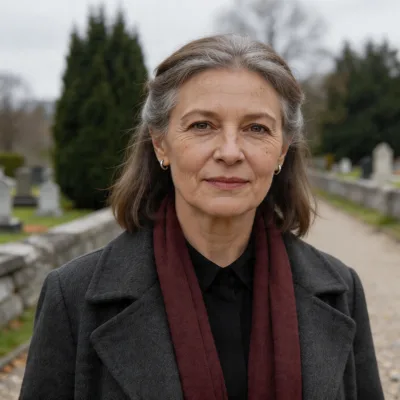 Claire Thompson
1. Around 37,500 People Die in New Zealand Each Year
Stats NZ recorded 37,491 deaths registered in Aotearoa New Zealand in the year ended December 2025. The year ended March 2025 was almost identical at 37,647 deaths, little changed from the previous year.
As the population continues to age, the annual death toll is gradually trending upwards, transforming the funeral industry and the demand for end-of-life services.1
2. Direct Cremation Costs NZ$3,000 to NZ$6,000
A basic direct cremation in New Zealand typically costs between NZ$3,000 and NZ$6,000, depending on location and what is included. This is significantly less than a traditional burial with a full service.
Cremation has become the most affordable mainstream option, which is one reason it now dominates New Zealand’s funeral choices.2
3. Cancer Is the Leading Cause of Death
Cancers are the leading cause of death in New Zealand, followed by ischaemic heart disease and cerebrovascular disease (stroke). In 2022, age-standardised rates were approximately 108.0, 42.2 and 19.7 deaths per 100,000 population respectively.
Together, cancer and cardiovascular disease account for the majority of New Zealand deaths each year, providing context for the kinds of loss families most often face.3
4. The Average Funeral Costs Around NZ$10,000
The Funeral Directors Association of New Zealand (FDANZ) suggests that NZ$8,000 to NZ$10,000 is a realistic ballpark for a modest funeral involving a cremation. A traditional burial with a full service commonly costs NZ$8,000 to NZ$15,000 or more once cemetery fees and a headstone are added.
Costs vary significantly by location: Auckland funerals often run NZ$12,000–NZ$16,000, while provincial and rural areas typically sit in the NZ$6,000–NZ$10,000 range.4
5. Life Expectancy in New Zealand Is Around 82 Years
Based on death rates in 2022–2024, life expectancy at birth is approximately 80.1 years for males and 83.5 years for females, giving an overall life expectancy of about 81.8 years.
New Zealand remains among the countries with the highest life expectancy in the world, reflecting the quality of its healthcare system and standard of living.5
6. Funeral Celebrant Fees Range from NZ$590 to NZ$800+
Funeral celebrants in New Zealand typically charge from around NZ$590 to NZ$800 or more, with the higher end reflecting GST-registered providers. The fee usually includes family meetings, writing the eulogy and delivering the ceremony.
Travel charges of around NZ$0.70–NZ$1.00 per kilometre often apply for venues outside the celebrant’s base region.6
7. Work and Income Funeral Grants Are Up to NZ$2,616
The maximum Funeral Grant from Work and Income is NZ$2,616.12, effective from 1 April 2025. This grant is income- and asset-tested and is intended to help with essential funeral costs for low-income families.
For deaths caused by injuries covered by ACC, the ACC funeral grant is NZ$7,990.30 from 1 July 2025, providing more substantial support where eligible.7
8. Personalisation Makes Eulogies More Meaningful
NZ celebrants and grief professionals consistently emphasise that personalised eulogies, those that include specific memories, anecdotes and the deceased’s own words, are far more comforting to the bereaved than generic tributes.
Including details about the person’s personality, passions and relationships helps mourners connect with the memory of their loved one and begin healing through shared remembrance.8
9. 472 New Zealanders Used Assisted Dying in the Year to March 2025
There were 472 assisted deaths reported in the year to 31 March 2025 under the End of Life Choice Act 2019, a 37% increase on the 344 assisted deaths in the previous year.
Cancer remains the most commonly cited underlying condition for assisted dying applications, mirroring international experience with similar regimes.9
10. Consumer NZ finds average funeral cost of NZ$9,500
Consumer NZ research from 2024 found the average attended funeral in New Zealand costs NZ$9,500, while a direct cremation without service averages NZ$2,800. Funeral costs have risen approximately 21 percent since 2019, outpacing wage growth. Roughly one in four families reported needing to borrow money to pay for a funeral.10
11. Assisted Dying Has Steadily Grown Since Legalisation
Between 7 November 2021 (when the Act came into force) and 31 December 2024, more than 1,200 New Zealanders received an assisted death. The vast majority were euthanasia rather than assisted suicide.
Most assisted deaths take place in aged care facilities, followed by hospices and private residences, reflecting where many end-of-life journeys naturally unfold.11
12. FDANZ: more than 75 percent of New Zealand funerals are cremations
The Funeral Directors Association of New Zealand estimates over 75 percent of all funerals in New Zealand now end in cremation, up from 65 percent in 2010. Auckland and Wellington exceed 85 percent cremation rates, while burial remains more common among Maori and Pacific communities. Direct cremation has grown to 12 percent of all dispositions.12
13. 51.6% of New Zealanders Have No Religion
In the 2023 Census, 51.6% of New Zealanders stated they had no religion, up from 48.2% in 2018. For the first time, “no religion” became the largest single category of belief in the country.
This significant shift directly affects funeral traditions, with secular celebrations of life and personalised, non-religious services becoming the norm rather than the exception.13
14. Eulogies Are a Central Part of New Zealand Funerals
The eulogy is considered one of the most meaningful elements of a New Zealand funeral or memorial service. Whether delivered by a family member, friend or celebrant, it provides an opportunity to honour the life and legacy of the person who has died.
A well-crafted eulogy weaves together personal stories, the deceased’s values and their impact on others. It serves as both a tribute and a source of comfort for those grieving.14
15. Christianity Remains the Largest Religious Grouping
Despite the rise of irreligion, around 32% of New Zealanders still identify with a Christian denomination, and other faiths including Hinduism, Islam, Buddhism and Sikhism continue to grow alongside immigration.
This religious diversity means funeral customs in New Zealand range from traditional church services to Hindu cremation rites, Muslim same-day burial and many other practices.15
16. Auckland Has the Highest Funeral Costs in the Country
Standard funerals in Auckland typically cost NZ$12,000 to NZ$16,000, around 25% above the national average. Wellington is the next most expensive at roughly NZ$10,500 to NZ$14,000.
Provincial towns and rural areas are noticeably cheaper, reflecting differences in cemetery fees, real estate costs and operating expenses for funeral homes.16
17. Māori Funeral Customs Centre on the Tangihanga
For Māori, the tangihanga (or tangi) is a deeply important funeral ritual, traditionally held on a marae over several days. It involves whaikōrero (formal speeches), waiata, and the gathering of whānau, hapū and iwi to farewell the tūpāpaku (the deceased).
Māori make up around 17% of the population, and tangihanga remain one of the most distinctive and powerful end-of-life traditions practised in Aotearoa.17
18. Writing a Eulogy Is One of the Hardest Tasks in Grief
Many people describe writing a eulogy as one of the most difficult yet rewarding tasks they undertake during bereavement. Condensing an entire life into a few minutes of words requires careful thought and deep reflection during a period when both are in short supply.
Despite the difficulty, the act of writing and delivering a eulogy can be profoundly therapeutic, providing a structured way to process grief while creating a lasting tribute.18
19. Pacific Funeral Traditions Add Further Diversity
Pacific peoples make up roughly 8% of New Zealand’s population, bringing rich Samoan, Tongan, Cook Islands, Niuean and Fijian funeral traditions. These often involve extended community gatherings, hymns, traditional dress and the giving of gifts (such as fine mats).
Pacific funerals tend to be larger and longer than their Pākehā counterparts, with strong emphasis on church, family and community roles.19
20. Cemetery Plot Costs Vary Widely by Region
Burial plot costs in New Zealand range from around NZ$1,500 in some smaller districts to NZ$5,000–NZ$8,000 or more in central Auckland and Wellington cemeteries. Interment fees, plot maintenance and headstones add further significant cost.
Rising land values in Auckland in particular have pushed cemetery costs upwards, contributing to the strong shift towards cremation as a more affordable alternative.20
21. Around 27% of New Zealanders Were Born Overseas
According to the 2023 Census, more than a quarter of New Zealand residents were born overseas, one of the highest proportions in the OECD. This adds Hindu cremation rites, Chinese ancestor veneration, Muslim burial customs and many other practices to the funeral landscape.
Funeral homes in major cities increasingly offer culturally specific services, recognising that there is no single “Kiwi” way to farewell someone.21
22. NZ Herald: green burial sites expanding to 16 nationwide
The New Zealand Herald counted 16 dedicated natural burial sites across the country in 2024, up from 5 in 2014. Around 2 percent of New Zealand burials are now natural, shroud-only burials, although demand is growing roughly 25 percent per year. Wellington City Council pioneered the first municipal natural burial cemetery in Australasia.22
23. Cultural Diversity Enriches New Zealand Funeral Practices
From Māori tangihanga and Pacific church services to Pākehā celebrations of life and immigrant traditions from across Asia, the Middle East and Europe, New Zealand’s funeral landscape spans an extraordinary range of customs.
This cultural richness means that eulogies in New Zealand often blend traditions, languages and customs, from te reo Māori phrases to multilingual tributes, creating uniquely personal farewells that reflect the multicultural identity of Aotearoa.
The funeral landscape in New Zealand is evolving rapidly, shaped by very high cremation rates, growing cultural and religious diversity, the steady uptake of assisted dying, and a clear shift toward more personalised, informal services. Through it all, the eulogy remains a cornerstone of how New Zealanders honour those they have lost. Whether delivered at a traditional church funeral, a marae-based tangihanga or a relaxed celebration of life, a heartfelt, well-crafted eulogy gives voice to grief, celebrates a life well lived and offers comfort to those left behind.23
24. Most Eulogies Last 5 to 10 Minutes
NZ funeral professionals generally recommend that eulogies last between 5 and 10 minutes: long enough to share meaningful stories and reflections without overwhelming an emotionally fragile audience. Anything beyond 10 minutes risks losing the room.
For first-time eulogy writers, a clear structure with an opening, key memories and a closing tribute provides a manageable guide through the process.24
25. Around Two-Thirds of Kiwis Want a Relaxed, Informal Service
Surveys suggest roughly 66% of New Zealanders prefer a relaxed and informal service over a formal funeral. As a result, “celebration of life” ceremonies have become increasingly popular across the country.
These services often feature personal touches like photo displays, favourite music and shared stories, with the eulogy serving as the emotional centrepiece of the gathering.25
26. Pre-Paid Funerals Are Growing in Popularity
An increasing number of New Zealanders are choosing to pre-pay or pre-plan their funerals through funeral trusts and prepaid plans, locking in today’s prices and easing the burden on family members.
Funeral trusts of up to NZ$10,000 are also exempt from asset testing for residential care subsidies, making them an attractive end-of-life planning tool.26
27. RNZ: 8,500 bereaved households claim the WINZ funeral grant
Radio New Zealand reported that the Work and Income funeral grant, capped at NZ$2,616, was paid to nearly 8,500 bereaved households in 2023. Average payout stood at NZ$2,330. The grant is income-tested and covers a declining share of total funeral costs, currently around 24 percent of an average funeral bill.27
28. Stats NZ records 38,000 deaths annually in New Zealand
Stats NZ reported 38,547 registered deaths in 2023, the highest figure since records began. The crude death rate stood at 7.4 per 1,000 inhabitants. Maori death rates remain about 1.7 times higher than the non-Maori population, reflecting persistent health inequities.28
29. Stuff: pre-paid funeral plans held by 18 percent of over-65s
Stuff reported, citing trust data, that approximately 18 percent of New Zealanders aged over 65 now hold pre-paid funeral arrangements averaging NZ$8,200 per plan. Total trust funds managed across the sector exceed NZ$700 million. Uptake among Pakeha is roughly double the rate among Maori and Pacific peoples.29
30. The Crude Death Rate Is Around 7 per 1,000
New Zealand’s crude death rate is approximately 7 deaths per 1,000 population per year, roughly in line with comparable high-income countries. The rate is expected to gradually rise as the population ages.
This trend means more New Zealand families than ever are navigating bereavement, creating growing demand for funeral services, grief support and resources for honouring loved ones.30
6. Around 75% of New Zealanders Choose Cremation (IBISWorld / Te Ara)
Industry estimates put the New Zealand cremation rate at roughly 70–75% of all funerals in 2025, with the figure continuing to climb. This is one of the highest rates in the world.
Forecasts suggest the cremation rate could approach 80% within the next decade or so, driven by cost considerations, urbanisation, environmental concerns and changing cultural preferences.
Sources
- Stats NZ(govt.nz)
- Consumer NZ(org.nz)
- Ministry of Health(govt.nz)
- FDANZ(funeraldirectors.co.nz)
- Stats NZ(govt.nz)
- Citizens Advice Bureau(org.nz)
- Work and Income(govt.nz)
- Celebrants Aotearoa(celebrantsaotearoa.co.nz)
- Ministry of Health(govt.nz)
- Consumer NZ(consumer.org.nz)
- Ministry of Health(govt.nz)
- Funeral Directors Association of New Zealand(fdanz.co.nz)
- Stats NZ(govt.nz)
- FDANZ(funeraldirectors.co.nz)
- Stats NZ(govt.nz)
- funeralhomes.co.nz(funeralhomes.co.nz)
- Te Ara(govt.nz)
- Hope Funerals(hopefunerals.co.nz)
- Stats NZ(govt.nz)
- MoneyHub(moneyhub.co.nz)
- Stats NZ(govt.nz)
- NZ Herald(nzherald.co.nz)
- Te Ara(govt.nz)
- NZ Seniors(nzseniors.co.nz)
- OneChoice NZ(onechoice.co.nz)
- Consumer NZ(org.nz)
- Radio New Zealand(rnz.co.nz)
- Stats NZ(stats.govt.nz)
- Stuff(stuff.co.nz)
- World Bank(worldbank.org)
Frequently Asked Questions
How common is cremation in New Zealand?
It is now the dominant choice. FDANZ estimates over 75 percent of funerals end in cremation, up from 65 percent in 2010, and Auckland and Wellington exceed 85 percent. Burial remains more common among Māori and Pacific communities.
What is a tangihanga?
The tangihanga (or tangi) is a deeply important Māori funeral ritual, traditionally held on a marae over several days. It involves whaikōrero (formal speeches), waiata, and the gathering of whānau, hapū and iwi to farewell the tūpāpaku. Māori make up around 17 percent of the population, and tangihanga remain one of the most distinctive end-of-life traditions in Aotearoa.
How long should a eulogy last according to New Zealand professionals?
NZ funeral professionals generally recommend eulogies of between 5 and 10 minutes, long enough to share meaningful stories without overwhelming an emotionally fragile audience. Anything beyond 10 minutes risks losing the room. A clear structure with an opening, key memories and a closing tribute helps first-time writers.
Are New Zealand funerals becoming less religious and more informal?
Yes. In the 2023 Census, 51.6 percent of New Zealanders stated they had no religion, the largest single category of belief, and surveys suggest roughly two-thirds prefer a relaxed, informal service. Secular celebration of life ceremonies with personal touches, and the eulogy as the emotional centrepiece, have become the norm.